

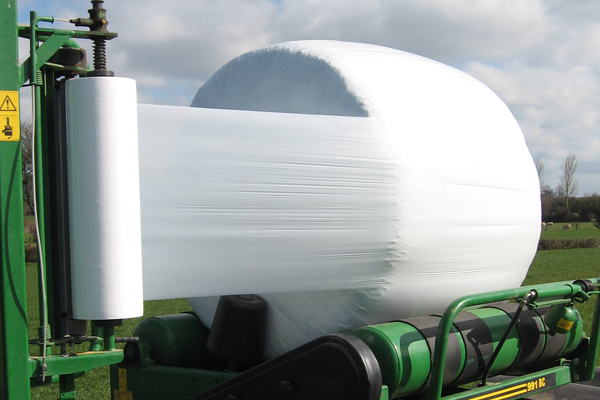
How Many Layers of Bale Wrap Do You Really Need?
At a Glance
- The number of wrap layers directly affects the oxygen barrier around your forage.
- Film quality and wrapping consistency are just as important as the number of layers applied.
- Storage duration, crop type, handling frequency and weather conditions all influence wrapping decisions.
- Protecting the wrap after baling is just as important as applying it correctly.
Why Bale Wrap Layers Matter
Every layer of stretch film contributes to one primary goal: keeping oxygen out and preserving forage quality.
Silage fermentation depends on maintaining anaerobic conditions inside the bale. Once oxygen re-enters, yeast and mold become active, reducing feed quality and increasing dry matter losses.
Applying too few layers can leave the bale more vulnerable to punctures, weathering and oxygen infiltration. On the other hand, simply adding more film isn't always the answer. Proper application, overlap and handling are equally important.
For producers, the objective isn't to use the most film - it's to create a dependable oxygen barrier that protects forage throughout the storage period.
Learn how proper wrapping fits into your overall forage management strategy on our Livestock & Feed Operations page.
It's Not Just About the Number of Layers
One of the biggest misconceptions is that bale protection depends only on how many layers are applied.
In reality, several factors work together.
These include:
- Film quality
- Stretch characteristics
- Film overlap
- Wrapping consistency
- Bale density
- Crop moisture
- Storage conditions
- Bale handling after wrapping
A well-wrapped bale using quality agricultural film often performs better than a poorly wrapped bale with additional layers.
Factors That Influence Wrapping Requirements
No two operations are exactly alike.
The ideal wrapping strategy depends on several operational and environmental factors.
Crop Type
Different forage crops have different storage characteristics.
For example:
- Corn silage
- Alfalfa
- Grass silage
- Mixed forage crops
Each presents different challenges during fermentation and long-term storage.
Storage Duration
The longer forage remains in storage, the greater the opportunity for damage caused by:
- UV exposure
- Wildlife
- Weather
- Equipment handling
Operations storing forage for extended periods should consider how storage time affects film performance.
Climate Conditions
Across North America, storage conditions vary considerably.
A producer storing bales through Canadian winters may face different challenges than an operation managing forage in the southern United States.
Factors such as:
- Intense sunlight
- Freeze-thaw cycles
- High winds
- Heavy snowfall
- Extreme summer temperatures
All influence long-term bale protection.
Bale Handling
Every move increases the possibility of damaging the wrap.
Bales may be handled:
- From the field
- Into storage
- During inventory management
- When transporting to feeding areas
Reducing unnecessary handling helps preserve the integrity of the oxygen barrier.
Common Wrapping Mistakes
Even high-quality agricultural film cannot compensate for poor wrapping practices.
Some of the most common mistakes include:
Delaying Wrapping
Forage should be wrapped as soon as practical after baling to begin the fermentation process under anaerobic conditions.
Inconsistent Overlap
Uneven overlap can leave thinner areas of protection around the bale.
Proper machine setup and regular monitoring help maintain consistency.
Poor Film Tension
Stretch film is designed to perform within specific application parameters.
Incorrect machine settings may affect film performance and sealing.
Damaged Wrapping Equipment
Routine maintenance helps ensure:
- Consistent film application
- Proper overlap
- Correct film tension
Equipment inspections before harvest can reduce unexpected issues during busy wrapping periods.
More Film Doesn't Replace Good Management
Adding additional layers won't compensate for poor storage practices.
Long-term forage preservation still depends on:
- Careful bale handling
- Prompt repair of damaged wrap
- Regular inspections
- Proper storage site selection
Successful silage management combines all of these practices—not just the amount of film applied.
Tip
Inspect wrapped bales after major weather events. A five-minute inspection can identify small punctures before they develop into larger spoilage areas.
Layers Alone Don't Prevent Spoilage
| Bale A | Bale B |
| ✔ Correct overlap | ✔ Additional film layers |
| ✔ Good film tension | ✖ Torn wrap |
| ✔ Proper storage | ✖ Wildlife damage |
| ✔ Minimal handling | ✖ Poor drainage |
| Result: Excellent forage preservation | Result: Spoliage despit additional film |
Best Practices for Better Bale Protection
Protecting forage begins before the first bale enters storage.
Consider these best practices:
- Wrap promptly after baling.
- Use agricultural film designed for silage preservation.
- Inspect equipment before harvest.
- Handle wrapped bales carefully.
- Store bales on clean, well-drained ground.
- Inspect storage areas throughout the year.
- Repair damaged wrap immediately.
Do's and Don'ts
| ✔ Do | ✖ Don't |
| Follow equipment manufacturer's wrapping recommendations | Assume every crop requires the same wrapping approach |
| Check overlap throughout the day | Ignore inconsistent film application |
| Store bales away from sharp objects | Stack bales where equipment frequently passes |
| Repair damaged film quickly | Leave punctures exposed for weeks |
| Inspect bales regularly | Wait until feeding to discover spoilage. |
Related Products
Silage Stretch Film
Designed to help maintain an effective oxygen barrier throughout storage.
Bale Net Replacement Film
Supports bale formation while helping protect forage during handling and storage.
Protecting Forage Starts Before Storage
The number of wrap layers is only one part of successful silage preservation.
Combining quality agricultural film with proper wrapping techniques, careful handling and routine inspections helps protect forage quality from harvest through feeding.
Whether you're managing a dairy, beef or mixed livestock operation, protecting every bale means protecting the investment you've already made in producing your forage.
Ready to Improve Your Wrapping Program?
Explore Sunfilm's agricultural film solutions designed to support reliable forage preservation across North American livestock operations.
Frequently Asked QuestionsIs applying more layers always better?Not necessarily. Film quality, overlap, handling and storage conditions all influence bale protection. Applying additional layers cannot compensate for poor wrapping practices or damaged film.Why is overlap important?Consistent overlap helps create a continuous oxygen barrier around the bale and reduces weak points where air may enter.Can weather affect wrapped bales?Yes. UV exposure, freezing temperatures, wind and wildlife activity can all affect bale wrap during long-term storage.Does every crop require the same wrapping approach?No. Crop type, moisture content, storage duration and local conditions should all be considered when developing a wrapping strategy.Should damaged wrap be repaired immediately?Yes. Prompt repairs help maintain the oxygen barrier and reduce the risk of spoilage spreading through the bale.